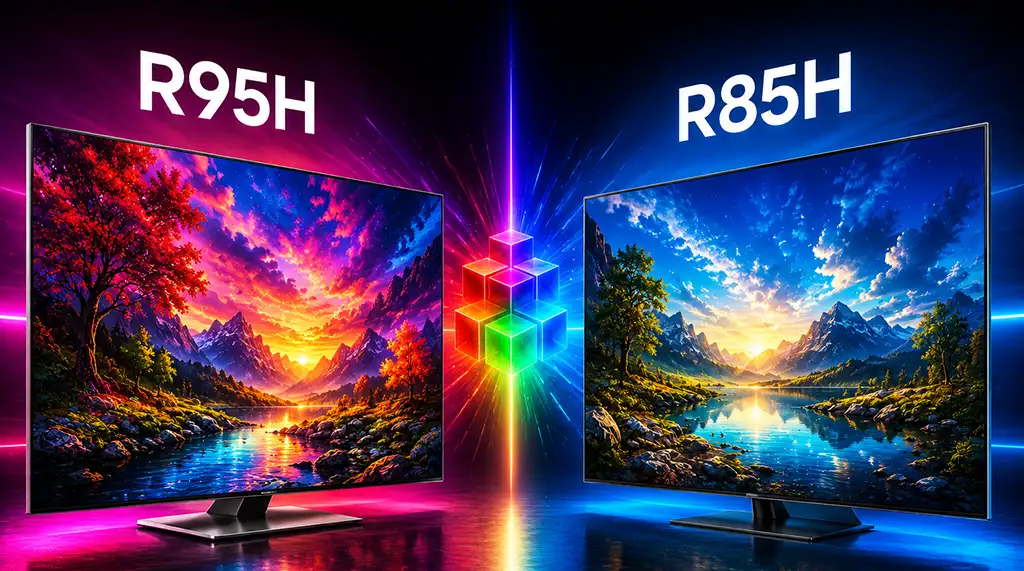
The 2026 Samsung Micro RGB TV lineup consists of two models: the R95H and the R85H. The R95H is the flagship and more expensive model, while the R85H is positioned as the more affordable option.
Both TVs use the same Micro RGB backlighting technology, which employs microscopic red, green, and blue LEDs as the display’s light source. Samsung refers to televisions based on this technology as Micro RGB TVs.
According to Samsung, both models deliver 100% coverage of the BT.2020 color space. However, this claim should be viewed with some caution. BT.2020 has an exceptionally wide color gamut, and even today’s best consumer displays typically achieve around 90% coverage. Furthermore, the VDE certification cited by Samsung may be influenced by factors such as the testing methodology, ambient lighting conditions, and the quality of the video content used during evaluation.
Both models support true 10-bit color depth, but they differ in their hardware implementation and most likely use entirely different display panels. The R85H is believed to feature a first-generation Micro RGB panel, while the R95H is equipped with a second-generation panel. This likely explains the significant price difference between similarly sized models, as well as the differences in the available screen size options.
| Feature | R95H | R85H |
|---|---|---|
| Technology | Micro RGB | Micro RGB |
| Processor | Micro RGB AI Engine Pro | Micro RGB AI Engine Pro |
| Color Coverage | 100% BT.2020 | 100% BT.2020 |
| Glare Free Coating | ✅ Yes | ❌ No |
| HDR10+ Advanced | ✅ Yes | ❌ No |
| Wireless One Connect | ✅ Ready | ❌ No |
| Zero Gap Wall Mount | ✅ Yes | ❌ No |
| Refresh Rate | 165Hz | 144Hz |
| Audio | 4.2.2ch / 70W | 2.0 / 30W |
| Available Sizes | 65″, 75″, 85″, (expected in late 2027) 130″ | 55″, 65″, 75″, 85″, 100″ |
Main Differences Between the R95H and R85H TVs
Glare-Free Coating
The R95H TV features a Glare-Free anti-reflective coating, which helps reduce screen glare and reflections. This is especially important for TVs designed to be used in brightly lit rooms.
The R85H model does not have a Glare-Free coating, which further indicates that the two models use different displays.
HDR10+ Advanced
The R95H supports Samsung’s latest HDR format — HDR10+ Advanced. It provides improved brightness rendering, optimization for different content genres, and more accurate local tone mapping compared to standard HDR10+.
The R85H supports HDR10+, but not the Advanced version. The difference between the two formats is relatively minor, as LED displays still cannot fully take advantage of all HDR capabilities.
One Connect
The R95H comes with a separate One Connect unit, which transmits data to the display wirelessly. This allows the control box with all ports and connections to be placed separately from the TV itself, providing more flexibility in installation.
Gapless Wall Mount
The R95H supports a multi-layer wall mount system designed to fit the TV almost flush against the wall, with virtually no visible gap.
Refresh Rate
The maximum refresh rate of the R95H is 165 Hz, while the R85H supports up to 144 Hz. However, these refresh rates are only available when the TV is connected via HDMI to a gaming console or computer. For regular video playback, the maximum supported refresh rate is 120 Hz.
In practice, the difference between 120 Hz and 165 Hz is very difficult to notice, and not every user will be able to see a difference. The higher refresh rate is mainly relevant for users who plan to use the TV for gaming.
What they don’t tell you, but you need to know
Samsung does not manufacture LED displays with RGB backlighting, as its LED panel manufacturing plant was sold to the Chinese company TCL. All panels are sourced from other manufacturers, which is why similar panels have the same cost regardless of whether they are used in Samsung, LG, TCL, Sony, or other brands’ TVs.
TVs with RGB backlighting are more expensive than standard QLED models, and their price is comparable to OLED TVs. Since these TVs have only been in production for two years, it is still too early to determine whether they have any hidden defects. Several more years of real-world use will be needed to find out.
Regardless of the backlight type, these are still LED TVs with their inherent limitations, such as the lack of true black levels and some pixel response delay. OLED TVs, for example, do not have these drawbacks.